
There was a time, not so long ago, when I would come home from work, drop my bag by the door, and immediately start calculating. How many hours until I could justify going to bed? Not because I was tired, exactly. More because bed was the only place in the apartment that felt genuinely, completely restful.
The sofa in my living room was fine. Functional. It had cushions and armrests and a color that matched the rug. But sitting on it never quite felt like settling into it. There was always a stiffness, a slight awkwardness. The need to rearrange myself every twenty minutes, to stack a pillow behind my back, to fold my legs just so to get comfortable.
Comfort was something I was always one adjustment away from. I never quite arrived.
THE SMALL SHIFT
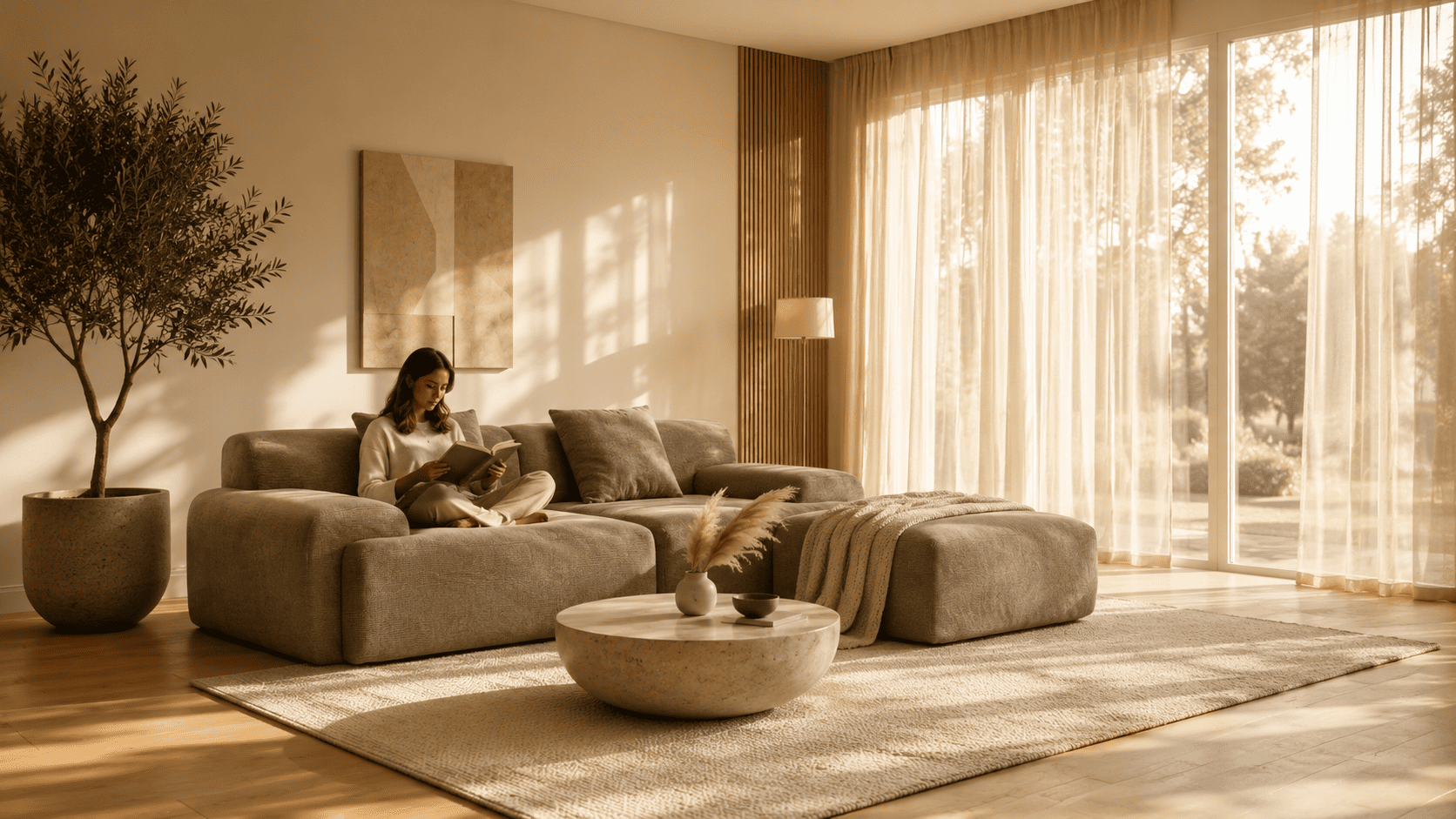
The change didn't come from a big decision. It came from a Saturday afternoon when I had nowhere to be and no particular reason to move. I had a cup of tea, a book I'd been meaning to start for months, and a sofa that finally let me stop thinking about how I was sitting.
It was a modular corduroy sectional, low slung and wide, the kind of thing that makes a room look considered rather than assembled. But what I remember most about that first afternoon isn't how it looked. It's how quickly I forgot I was sitting on furniture at all.
"I sank into it the way you sink into a bath, slowly, completely, with a small involuntary exhale."
The seat depth was generous enough that I could curl my legs up without my feet dangling off the edge. The foam underneath, dense and substantial, held its shape instead of compressing into something flat. The corduroy fabric had a texture I kept running my fingers along: soft ribbing, fine and even, the kind that feels warmer than it looks and makes you want to keep touching it.
I read forty pages that afternoon. I don't think I shifted position once.
WHAT COMFORT ACTUALLY DOES
We talk about comfort as if it's a luxury, something extra, something nice to have. But I've come to think that physical comfort is closer to a foundation. When your body isn't quietly negotiating with the surface it's resting on, your mind gets to be somewhere else entirely. You can actually follow a thought to its end. You can be present in the room.
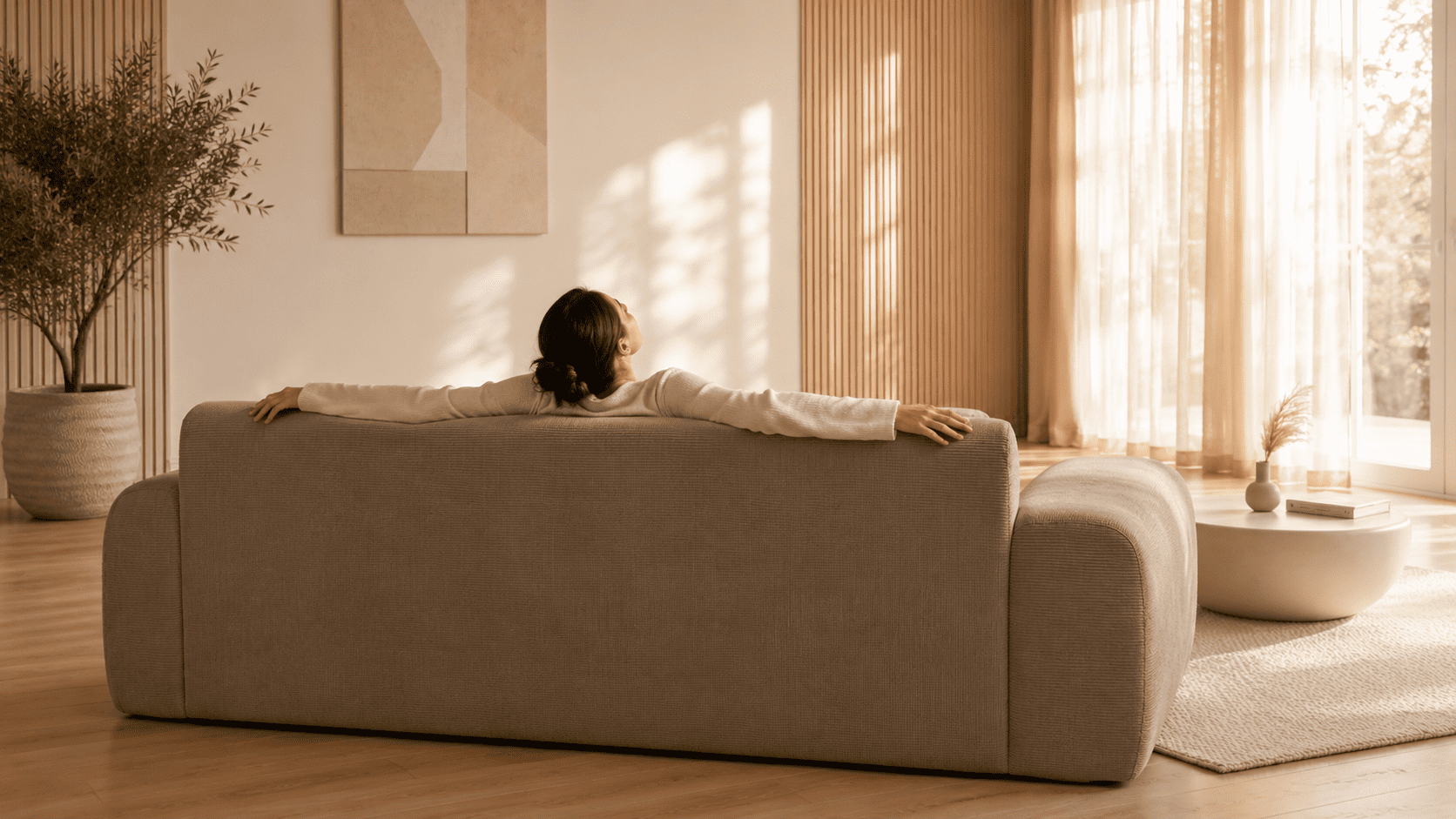
The wide armrests, padded and flat, not the narrow rails that dig into your elbow, became places I actually used. A book propped on one side. A mug balanced carefully on the other. The ottoman pulled close so I could stretch out fully, the whole length of me held by something that felt built for rest rather than display.
My evenings changed. Not dramatically. Not all at once. But gradually I stopped calculating the hours until bed. The living room became a place I wanted to stay.
A ROOM THAT HOLDS YOU
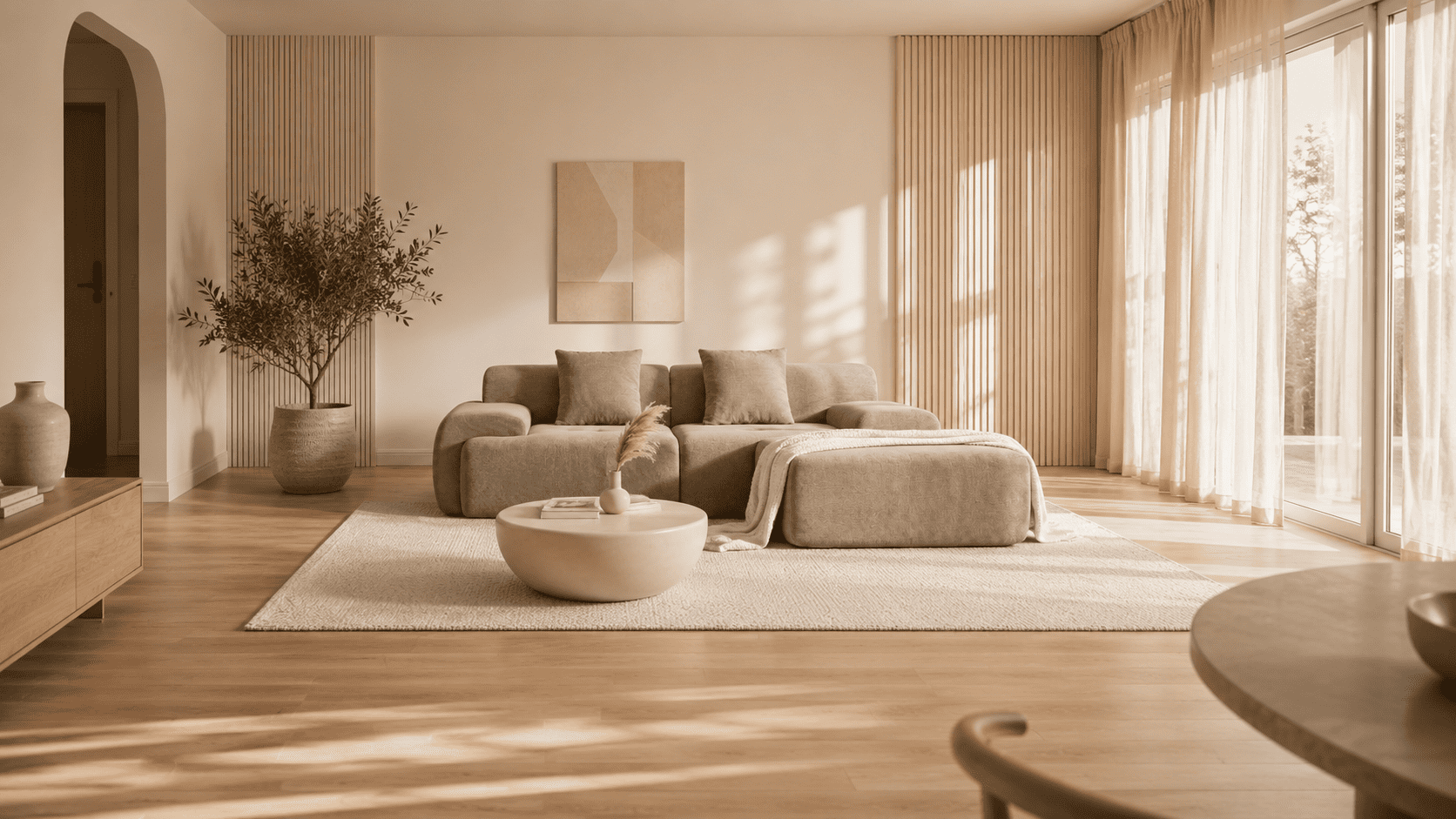
There's something particular about corduroy in winter light. The ribbed fabric catches the late afternoon sun differently than linen or velvet. It has a quiet texture, warm without being heavy, casual without being careless. The muted taupe color of this piece sat softly in the room. It didn't demand attention. It just made everything around it feel more settled.
The modular configuration meant I could arrange it to face the window when the light was good, or rearrange it on a Sunday afternoon when I wanted a change. That ease, the sense that the space was responsive to how I wanted to live in it rather than fixed and permanent, made the whole room feel more mine.
And because the pieces arrive ready to use, without the usual afternoon of assembly and frustration, the first thing I experienced wasn't effort. It was rest.
"The living room became a room I actually lived in, not passed through, not waited in, but genuinely inhabited."
Friends started staying longer when they came over. Conversations drifted into the evening without anyone noticing. Someone always ended up stretched across the ottoman, halfway horizontal, still talking. That's what good seating does, I think. It removes the invisible pressure to move on.
THE DETAILS THAT MATTER QUIETLY
I've thought about what specifically made the difference, and I keep coming back to things that seem almost too small to mention. The seat depth that lets you sit back fully without perching. The foam that doesn't flatten over the course of an evening. The fabric that's soft enough to fall asleep against but forgiving enough that a curious cat wandering across it doesn't feel catastrophic.
These aren't features you notice consciously. They're things you only really understand in their absence, in all the sofas before this one, where something small was always slightly off.
Here, nothing is slightly off. And that absence of friction, that quiet rightness, is what makes you stay.
WHO THIS IS FOR
If your living room has started feeling like a room you pass through rather than one you rest in, if you find yourself always slightly adjusting, always one cushion away from comfortable, this kind of change is worth considering.
It won't reorganize your schedule or give you more hours in the day. But it might make the hours you already have feel more inhabited. More yours.
Sometimes the smallest shift in a room is the one that makes you want to come home to it.
That Saturday with the tea and the book, I still think about it. Not because anything remarkable happened. But because I remember finishing the chapter and looking up and thinking: I don't need to be anywhere else right now.
That, I've decided, is what a good home feels like. Not perfect. Not styled for a photograph. Just genuinely, quietly enough.
If this kind of rest sounds like something your home is missing, the sofa in this story is the SIYSMILE Modular Corduroy Sectional, currently available on Amazon. It arrives compressed and ready to expand in minutes, no tools needed.